Backrooms
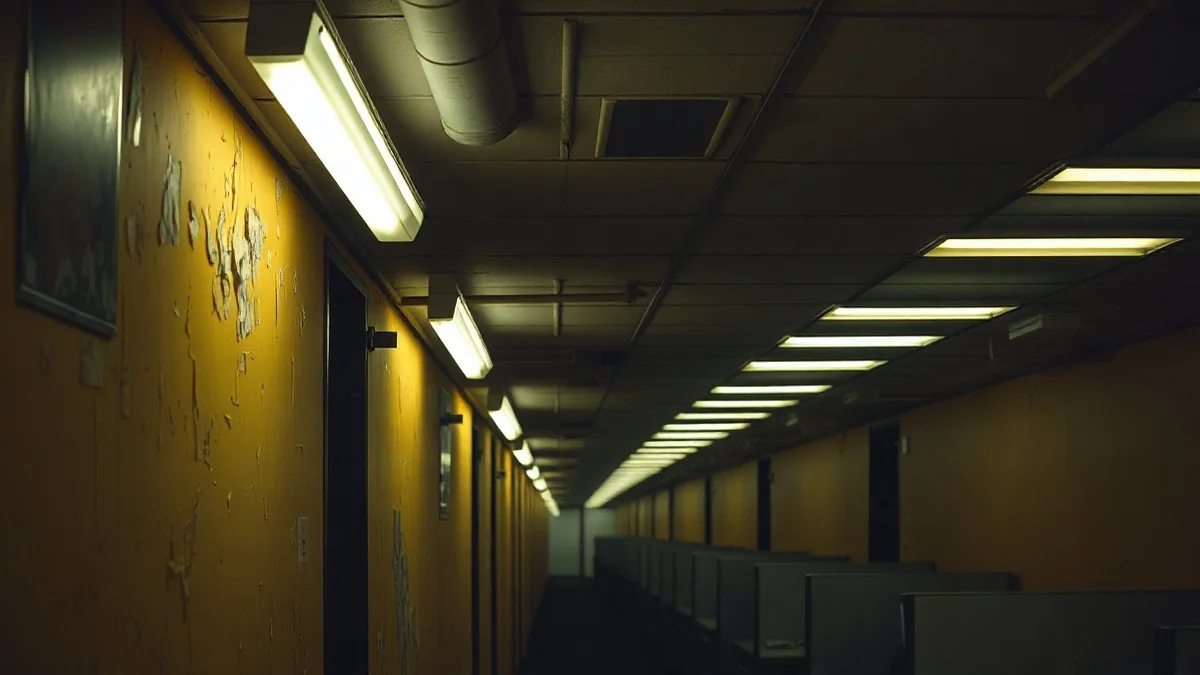
If you were a teenager scrolling through YouTube in the mid-2010s, you know what the Backrooms are. You know the yellow wallpaper, the buzzing hum of fluorescent lights, and the suffocating realization that you aren’t alone. If you were an adult in the early 2020s, you probably just rolled your eyes and assumed the cinematic adaptation was going to be a disposable cash grab. We’ve seen this cycle before: a terrifying concept spawns a million fan edits, and Hollywood inevitably tries to turn it into a blockbuster franchise.
However, the 2026 adaptation of Backrooms, directed by Kane Parsons and produced by the James Wan-led Atomic Monster, surprisingly avoids the urge to turn the liminal spaces into a slasher flick. Instead, it offers a slow-burn psychological horror experience that tries to respect the original source material’s atmosphere rather than just cashing in on the thumbnail views. The result is a film that is less “Final Destination in a maze” and more “Eraserhead in a furniture showroom,” a distinction that will likely please purists and frustrate action-hungry genre fans.
The film opens with a concept that sounds deceptively simple: a strange doorway appears in the basement of a furniture showroom. This premise, outlined in the film’s description, immediately grounds the cosmic horror in a very terrestrial, corporate setting. The juxtaposition of consumer goods—couches, carpets, lamps—with the unknown void behind the door suggests a critique of modern isolation. The tagline, “Everything must go,” feels less like a sales pitch and more like a grim prophecy.
Director Kane Parsons, who previously made waves with his original animated short of the same name, brings a tactile quality to the live-action adaptation. The film runs for 110 minutes, a runtime that is generous for a genre piece, but Parsons utilizes every second to build dread. The production design by Danny Vermette is meticulous, recreating that specific, unsettling texture of old office carpets and peeling paint. It is a testament to the crew’s ability to make the mundane terrifying.
Where the film could have easily tipped into camp, the casting decisions keep it grounded in realism. The ensemble features Renate Reinsve as Mary, an actress known for the arthouse film The Worst Person in the World, and Chiwetel Ejiofor as Clark. Having such established dramatic actors inhabit a setting that is essentially a “creepy viral video” is a bold move. It suggests that the characters aren’t just victims, but perhaps part of a larger, unknown narrative. Mark Duplass and Finn Bennett round out the cast as Phil and Bobby, respectively, providing a grounding element that hints at domestic tensions before the reality of the Backrooms collapses in upon them.
The horror here isn’t jump scares; it is the horror of the uncanny. The film leans heavily into the “cosmic horror” subgenre, specifically the feeling of insignificance. You are small, the space is vast, and the rules change when you blink. The sound design, handled by Eugenio Battaglia, is the film’s greatest asset. The low-frequency hum of the ventilation system is used as a primary antagonist, a constant, vibrating reminder of the environment’s artificiality. It makes you feel exposed, even when the characters are alone in a room.
There is a pervasive sense of “stuckness” throughout the runtime. The film captures the specific ennui of the internet meme: the knowledge that you are in the wrong place, and there is no going back. However, the film struggles slightly when it tries to explain the mechanics of the doorway. As the plot thickens and the characters attempt to escape, the “Mystery” genre element takes over, and the film gets bogged down in exposition that tries to rationalize the impossible. It’s a classic genre trap—once you start asking too many “why” questions, the atmosphere dies.
The A24 production banner attached to this project implies a certain artistic ambition, and that ambition is most visible in the cinematography. The use of wide angles and low lighting emphasizes the claustrophobia of the infinite corridors. Yet, the film never quite commits to a definitive genre identity. It has the budget of a studio thriller, the grit of a found footage experiment, and the surrealism of a nightmare. This hybridity can be disorienting, but it mirrors the feeling of the Backrooms themselves.
Ultimately, Backrooms is a successful atmospheric exercise, though perhaps not a definitive narrative journey. It relies on the viewer’s familiarity with the concept to carry it forward, which is a risky strategy for a theatrical release. If you enter the theater expecting a high-octane chase scene involving “Entity 68,” you will be disappointed. But if you are looking for a slow-burn exploration of psychological dread within a beautifully rendered nightmare landscape, this 110-minute trip might just stick with you. It proves that even an internet meme can be elevated to art if the crew is willing to respect the source material’s silences.
This article was generated by an AI system and reviewed by our editorial process.