Meat Days
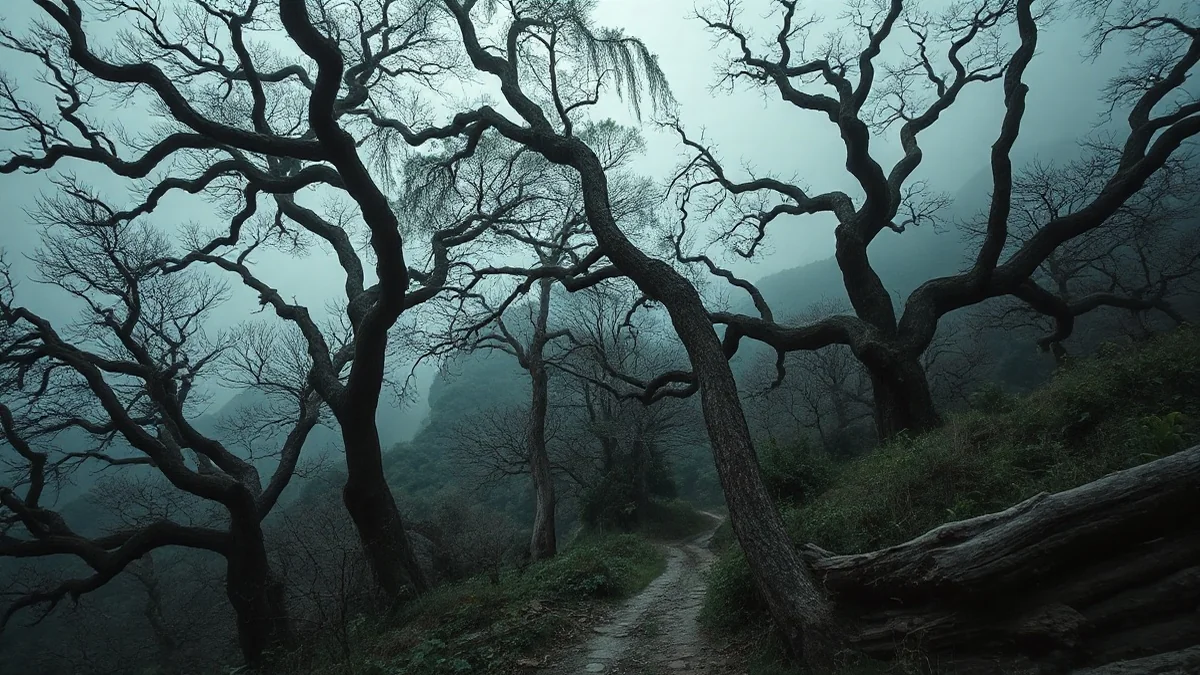
If you’ve spent any significant amount of time scrolling through obscure horror catalogues, you’ve likely encountered the term “student film” and immediately rolled your eyes. We’ve all seen the low-budget, shaky-cam nightmares that look like a fever dream filmed on a phone. However, every now and then, a student film slips through the cracks and manages to disturb you in a way that glossy Hollywood blockbusters never could. Enter Meat Days, a 2006 Taiwanese animated feature that clocks in at a baffling twelve minutes. Produced by the Tainan National University of the Arts, this is not a movie you sit down to enjoy; it’s a movie you sit down to witness, a grim experiment in micro-narrative directed by Joe Hsieh. With a TMDB rating of 5.5 and a runtime that barely covers the cost of catering for a bigger production, it is the definition of a horror curio.
To understand Meat Days, you have to accept that it defies traditional genre expectations. It isn’t a sprawling epic; it is a concentrated dose of visceral imagery. The premise is simple, almost laughably so on paper: “In a chaotic time of men eating men, A-e gets some human meat by selling her body…” . It sounds like a sketch from a late-night comedy show, but in the hands of Hsieh, it becomes a grim, expressionistic nightmare. Because the runtime is so short, there is no time for subplots, romance, or moralizing. You are dropped straight into the chaos.
Here are five reasons why Meat Days deserves a spot on your watchlist, even if it is the kind of film you immediately regret watching right before bed.
1. The Runtime is a Feature, Not a Bug Let’s talk about the 12-minute runtime. It’s shorter than most elevator rides. In the world of cinema, usually, the longer a film drags on without purpose, the more obnoxious it becomes. But in the case of Meat Days, the brevity is essential to its atmosphere. This isn’t a movie that tries to build tension slowly; it’s a barrage. It attacks you with its visuals and themes with the rapidity of a panic attack. It creates a sense of urgency and hopelessness that feels more authentic than a three-hour torture-porn marathon. You watch it, you digest it, and you’re left trying to process the sheer density of the content compressed into a fraction of an hour. It forces you to confront the depravity of the premise without giving you time to look away.
2. The “No Language” Approach One of the most fascinating details regarding Meat Days is that the spoken languages are listed as “No Language.” This means the film relies entirely on visual storytelling. In an era where every indie horror movie feels the need to over-explain itself with dialogue, subtitles, and expository flashbacks, Meat Days strips away the comfort of language. You cannot read the horror; you have to see it. The absence of dialogue removes the filter of human understanding. It feels more primal, like watching a nature documentary of a predator hunt, but with the added, sickening layer of humanity. The chaos of the “men eating men” scenario is conveyed entirely through expressionist animation, leaving the interpretation of intent open to your own worst imagination.
3. It Hits the Body Horror Sweet Spot Body horror is a crowded genre, filled with filmmakers trying to out-gross one another with exploding viscera and practical gore effects. Meat Days approaches this subgenre from a unique, almost anthropological angle. The concept of “selling one’s body for meat” isn’t just about gore; it’s about commodification and survival in a dystopian nightmare. It taps into the primal fear of being used and consumed. The animation style, likely influenced by the raw, punk ethos of early 2000s internet animation, gives the gore a tactile, clay-like texture that feels unsettlingly real. It doesn’t look like CGI; it looks like a nightmare drawn by a hand that was forced to draw it. It’s the kind of body horror that sticks with you because it questions the very value of the human body when society collapses.
4. The DIY Aesthetic as an Art Form Produced by Tainan National University of the Arts, Meat Days carries the distinct DNA of a project created in a laboratory rather than a studio. There is a lo-fi, experimental quality to the animation that grounds the film in a specific era of Taiwanese indie cinema. It doesn’t have the slick polish of a Disney movie or even a modern studio production; it has the grit of a underground movement. This aesthetic choice actually enhances the horror. When a film looks like it was made on a shoestring budget with passion rather than profit, the content feels more dangerous. You get the sense that the filmmakers were experimenting with the medium, using animation not just as a tool for storytelling, but as a vehicle for pure psychological distress.
5. The Isolation of the Narrative While it’s easy to dismiss Meat Days as a one-off weirdo flick, it captures a very specific feeling of isolation. The “chaotic time” mentioned in the synopsis suggests a collapse of societal norms. When you remove the context of a normal society, you are left with pure survival instinct. The film is a snapshot of a world where the social contract has been shredded. Watching A-e navigate this hell is less about a specific plot point and more about the existential dread of being alone in a hostile environment. It’s a microcosm of cosmic horror—small, personal, and inevitable. It serves as a reminder that in the face of true chaos, humanity is fragile, easily broken, and frequently delicious.
Ultimately, Meat Days is not a film for everyone. It’s short, it’s silent, and it’s undeniably weird. It has a TMDB vote count of only two, suggesting that the number of people willing to sit through a 12-minute movie about cannibalism is exceedingly small. But that is the beauty of it. It exists in the margins, a bizarre footnote in the history of Taiwanese animation. It refuses to play by the rules of genre, trading character development for atmosphere and dialogue for dread. If you can find a copy, or if you stumble across it while doom-scrolling, give it twelve minutes. Just make sure you aren’t hungry beforehand.
This article was generated by an AI system and reviewed by our editorial process.