Silent Hill
Video game adaptations have a notorious reputation for being soulless cash grabs, or worse, films that completely misunderstand the source material to the point of mockery. We’ve had Alone in the Dark and Resident Evil (the first one, anyway) that felt like they were written by someone who only played the games in five-minute bursts. So, when Silent Hill hit theaters in 2006, there was a specific, cynical fear that it would be a glossy, hollow imitation of a world that had terrified teenagers since 1999.
It wasn’t. Christophe Gans, a French director with a penchant for European folklore and dark fantasy, took the reigns, and despite a few narrative stumbles, he delivered something that actually feels like a “real” movie. It’s grim, it’s messy, and it’s utterly unapologetic.
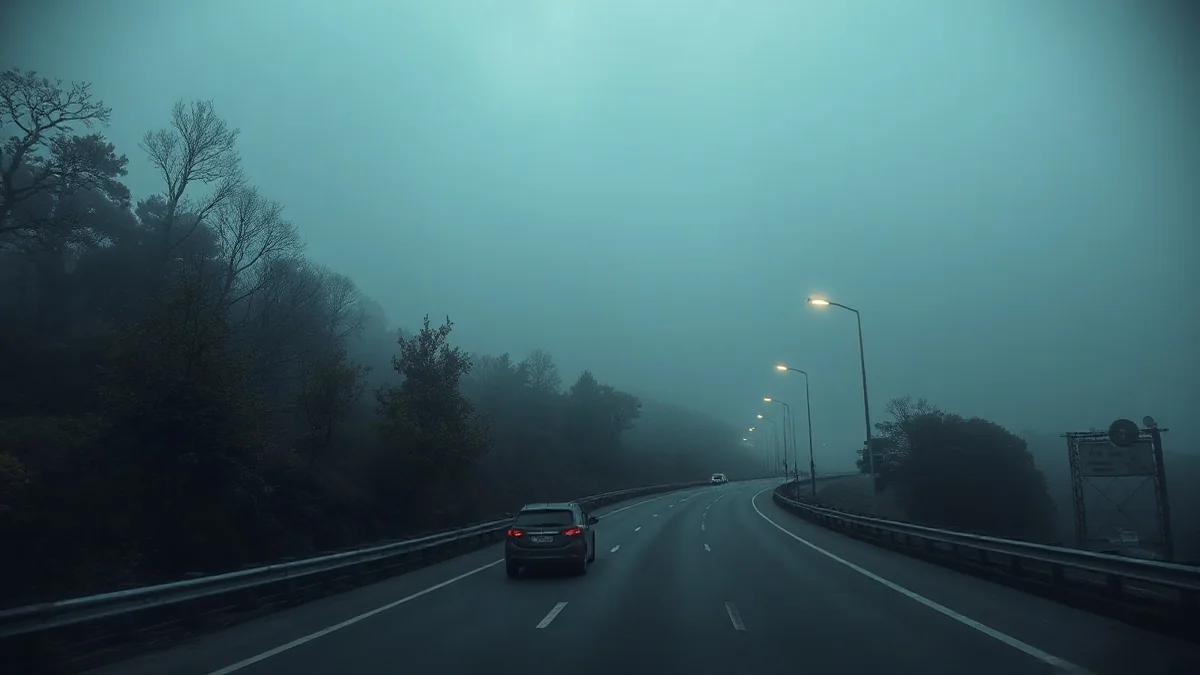
The premise is simple enough for a mother-in-distress movie: Rose (Radha Mitchell) is desperate. Her adopted daughter, Sharon (Jodelle Ferland), sleepwalks and murmurs the name of a town. Rose decides the only cure is to take her to Silent Hill. They drive into a fog bank, crash the car, and Sharon vanishes.
From there, the film becomes a masterclass in environmental storytelling. We know the lore of Silent Hill—it’s a town trapped in a perpetual hellish nightmare. Gans and his crew don’t explain it to you; they just subject you to it. The cinematography, by Dan Laustsen, creates a stunning dichotomy: the “real” world is a desolate, ash-covered wasteland of monochromatic greys, while the nightmare is a rusted, orange nightmare of industrial decay.
This is where the film’s budget really pays off. Unlike the CGI-heavy bloat of its contemporaries, Silent Hill leans heavily on practical effects. The monsters—most notably the “Red Pyramid Thing” played by creature designer Roberto Campanella—are tangible, horrifying physical entities. They feel heavy, gritty, and rooted in a weird, cosmic body horror that feels less like a video game boss fight and more like a manifestation of the town’s collective guilt.
But the core of the movie isn’t the monsters; it’s the people. Rose is a perfectly competent lead for a genre movie, which is refreshing. She doesn’t just scream and run; she investigates, she fights, and she endures. She isn’t aided by a “just in time” savior, but rather by sheer determination. Her husband, Christopher (Sean Bean), is a side character who functions more as a narrative anchor to keep the audience grounded in the “real world” timeline, which splits off from the main action about 45 minutes in.
The villains are the religious zealots known as the Order of the Holy Militia. They aren’t stock villains; they are presented as genuinely terrifying fundamentalists. Their doctrine is twisted, but the fear they inspire is palpable, anchored by the performance of Deborah Kara Unger as Dahlia Gillespie, the town’s former resident and drug-addled prophetess.
It is easy to get lost in the atmosphere, but the film has a specific, grotesque history involving a child named Alessa. It is often misremembered that the cult burned Alessa in a simple kitchen oven. In reality, the narrative centers on the industrial atrocity committed at the town’s ironworks, where she was burned alive at a massive furnace. This distinction is vital; the horror of the scene isn’t domestic, it’s industrial and catastrophic. It’s the difference between a gruesome family dispute and a state-sponsored atrocity.
The narrative logic gets a little bit hazy in the third act, as the film tries to explain the metaphysical mechanics of how the town splits into the “Otherworld” based on the memories of those who enter it. It becomes a bit of a brain-bender, leaning heavily into the “cosmic horror” elements of the game series. If you are looking for a slasher where the killer has a motive you can understand, you might get frustrated by the cult’s random cruelty.
However, the film’s commitment to its own madness is what makes it work. The resolution hinges on the duality of Sharon and Alessa, played by the young Jodelle Ferland. It’s a heavy, emotional punch that lands despite the confusing science.
One of the few genuine missteps is the ending. Gans decided to cut to the real world where Christopher is frantically searching for his wife, hoping for a domestic reconciliation. While this gives Sean Bean something to do, it dilutes the bleak, apocalyptic tone that the movie spent two hours building. It feels like a studio interference requirement—a happy ending for the “real world” characters that feels tacked onto the grim finale of the nightmare.
Ultimately, Silent Hill is a technical marvel. The production design, created by Carol Spier, is incredible. The score by Akira Yamaoka and Jeff Danna blends industrial noise with haunting melodies that will stick in your head. The sound design is aggressive; the silence of the fog is louder than the monsters.
It’s hard to imagine a movie like this getting made today. It’s long—clocking in at 125 minutes on TMDB—which feels like an eternity when you are trapped in a nightmare town, but in the best way possible. It’s a production by Davis Films and Konami that dared to be weird. It respects the intellectual property enough to not just be a license to print money, but ambitious enough to try and elevate the genre.
It isn’t perfect. The dialogue is sometimes clunky, and the ending drags. But it stands as a testament to the potential of the adaptation medium. It takes a property defined by static black-and-white 2D graphics and brings it to life in a way that is 3D, visceral, and genuinely scary. We’ve been waiting for another horror film this atmospheric since this one first hit the theaters, and despite two sequels that failed to capture the same spirit, we’re still waiting.
This article was generated by an AI system and reviewed by our editorial process.