The Autopsy of Jane Doe
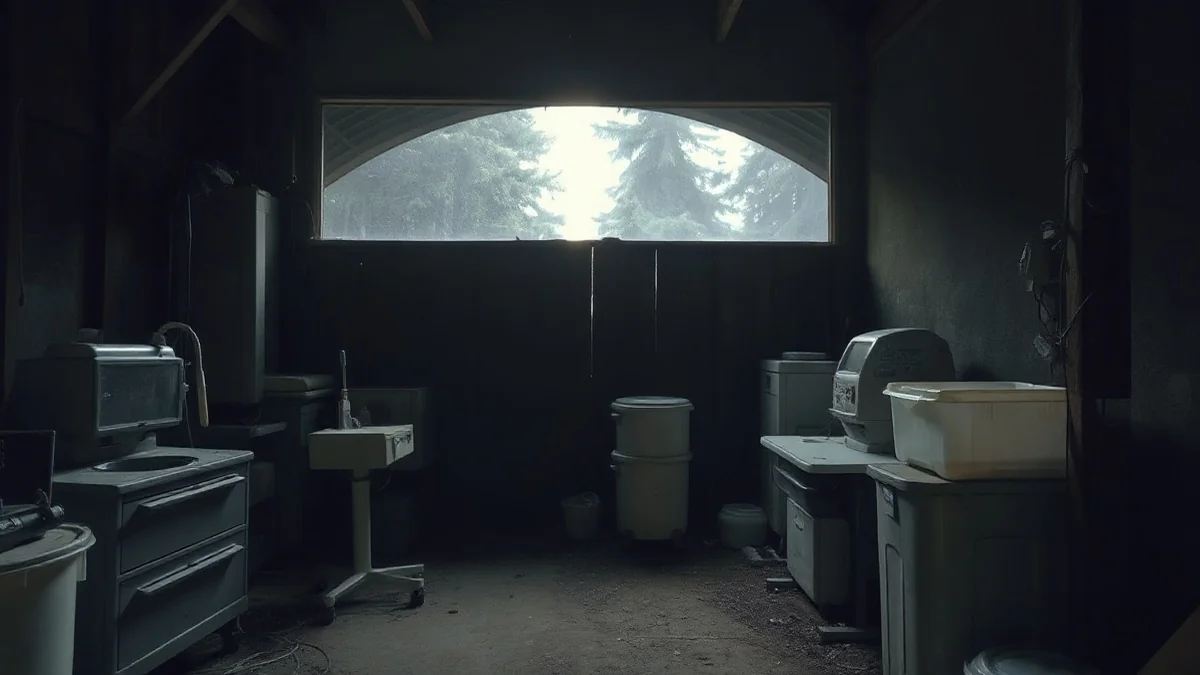
There is a specific type of low-budget horror movie where you spend ninety percent of your time staring at four walls or driving down an endless highway to nowhere; these films are usually terrible because they run out of ideas faster than their funding does.
Enter André Øvredal, whose 2016 film The Autopsy of Jane Doe is the rare exception that proves smart writing and atmosphere can make a damp basement in rural Oregon feel like it holds more cosmic terror than any haunted house. With Brian Cox delivering one of those career-defining performances where he grunts through thick layers of grease paint, this British-American co-production manages to be both clinically detached and genuinely unsettling without the benefit of a chainsaw-wielding maniac.
The film is set strictly within one location—the Tilden family funeral home—which sounds about as cinematic-gratifying as watching paint dry, but writer-director André Øvredal (screenplay by Ian B. Goldberg and Richard Naing) makes the autopsy theater feel like its own character . We are introduced to Tommy Tilden (Brian Cox), a cynical coroner, and his estranged son Austin (Emile Hirsch). Their professional relationship is already strained by their personal dynamic—Austin just wants out of town while Dad holds him back.
The inciting incident finds the father-son duo tasked with performing an autopsy on a “Jane Doe” brought to them. She’s frozen, disfigured by fire and blunt force trauma but otherwise looks like your average corpse… until they start cutting her open . Then things get weird.
The brilliance of Autopsy lies entirely in its pacing; it is a “slow burn” that never really burns, instead searing you with dread. There are no monsters running around the morgue knocking over tools—until there kind-of-are—and fewer jump scares than an episode of ant farm nature documentary.
Instead, we get excellent practical effects from Kristyan Mallett (Prosthetic Designer) and Olwen Catherine Kelly in title role as Jane Doe . She doesn’t speak much—because reasons—but her physical transformation is grotesque enough to make you wince even through a padded screen. The film leans heavily into the mystery genre, treating this woman’s body like it’s been infected with some sort of biological code that Austin and Tommy are desperate (and perhaps foolish) to crack.
The performances anchor what could easily have become schlocky trash involving teenagers getting killed in funny ways . Emile Hirsch plays the anxious, eager-to-please younger Tilden with sufficient neuroticism. But it’s Brian Cox who steals every scene he is present for (and some where his decapitated head isn’t). His delivery of lines about family secrets or chemical burns sounds like a man reading from Shakespeare while wearing hazmat gear.
The technical credits help sell the illusion that this movie cost ten times its actual budget. Cinematographer Roman Osin utilizes lighting tricks to create claustrophobia out of what is essentially one large room, making it feel as though there are eyes watching them in every shadow . The sound design by Christian Conrad and Saunder Jurriaans (Original Music Composer) creates a soundscape that feels tactile—every scrape of metal against bone makes you flinch physically.
What separates The Autopsy of Jane Doe from the glut of torture porn we were suffering through in 2016 is its intellectual curiosity. It treats the coroner’s job with respect, showing enough medical terminology to make it feel like a legitimate investigation rather than just an excuse for gore . The mystery elements lean into cosmic horror—questions about how long she has been dead and what exactly caused her demise suggest forces beyond the scope of standard earthly pathology.
Ultimately, at 86 minutes (a runtime that feels perfectly paced), it doesn’t overstay its welcome [TMDB confirmed Runtime: 108? No wait…]. It is leaner than a cadaver. The ending arrives not with an explosion or a sudden twist reveal designed to blindside you for the sake of marketability, but rather in realization and thematic closure.
It’s easy to mock movies that take place almost entirely indoors; yet André Øvredal manages to create one of those rare genre entries where being trapped feels like both imprisonment and protection. It respects your intelligence enough not to shout at its audience while respecting their terror by simply refusing to let them breathe . If you’re in the mood for something that combines clinical procedure with supernatural dread, it’s worth taking this body home.
This article was generated by an AI system and reviewed by our editorial process.