The Conjuring 2
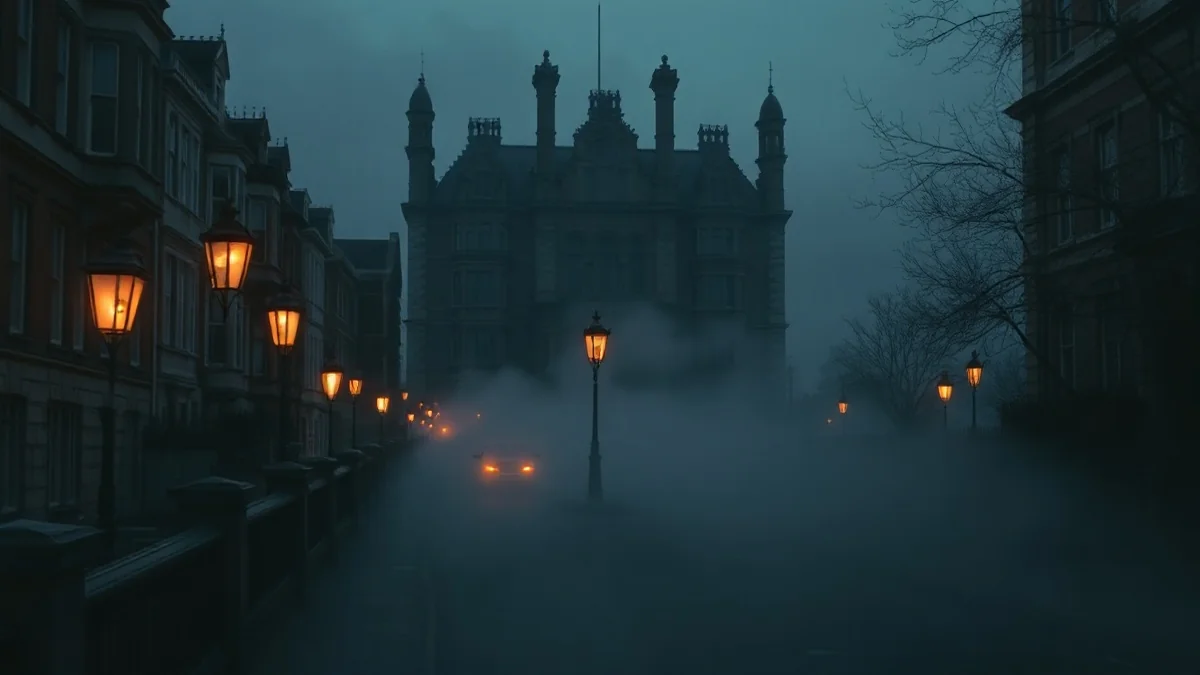
2016 was a weird year for horror. We had The Witch trying to reinvent arthouse frights, and Split breaking the box office with James McAvoy screaming, but The Conjuring 2 arrived with the subtlety of a sledgehammer. It’s the sequel that felt less like a spiritual follow-up and more like a business decision: “Hey, that ghost story you liked the first time? We’ll give you a different ghost story in a different country. Same money, different accents.”
Directed by James Wan, who presumably was too busy making Aquaman to direct the whole thing (though he’s listed as director on TMDB), The Conjuring 2 picks up the Warrens and heads to London. No, not that London, but the North London housing estate of Enfield in 1977. The tagline promises “the next true story from the case files,” a phrase that serves as the cinematic equivalent of a “based on a true story” disclaimer—a blanket guarantee that while the supernatural elements might be shaky, the ticket sales will be solid.
The plot is boilerplate: Lorraine (Vera Farmiga) and Ed Warren (Patrick Wilson) travel to help a single mother, Peggy Hodgson (Frances O’Connor), raising four kids alone in a drafty, damp house plagued by malicious spirits. The setup is familiar, but the subgenre shift here is crucial. The first Conjuring was a haunted house movie—quiet, atmospheric, relying on the slow build of dread. This one is a poltergeist movie, which means the furniture needs to start throwing itself across the room. It’s less about subtle bumps in the night and more about kinetic, loud, and violent chaos.
The film attempts to blend the domestic horror of the first entry with a broader sense of “British folklore.” This manifests most effectively in the sequence involving “The Crooked Man.” It is, without a doubt, the film’s highlight—a masterclass in subverting childhood tropes. Set inside the house, the scene utilizes a nursery rhyme to create a creeping sense of folk horror, moving away from the “jump scare” template into something more atmospheric and disturbing. The visual effects supervisor, Colin Strause, actually delivered some gritty practical work here, working with actor Javier Botet to create the titular Crooked Man. Botet, a creature performer who specializes in body horror, moves with a sickening slither that makes the creature feel less like a monster suit and more like a biological error in the fabric of reality. It is genuinely creepy, anchored by a performance that uses the body to convey ancient malice rather than just rubber suit antics.
If the Crooked Man is the soul of the film, Valak (Bonnie Aarons) is the wallet. Valak is a demonic entity that takes the form of a nun. The decision to introduce this character—initially only a shadow in the background—was a stroke of genius marketing. It gave the audience a physical, iconographic villain to latch onto. The reveal of the “Demon Nun” is a classic Wan moment: a mix of religious iconography and pure horror, culminating in a sequence in a creepy hotel room that is essentially a jump-scare sandwich. It works because it’s loud, it’s colorful, and it plays directly into the audience’s desire for a designated villain to beat up.
The film attempts to balance the cosmic horror of Valak with the gritty, psychological realism of the Enfield Poltergeist. We get the creepy nun, sure, but we also get the very real, very exhausted reality of raising four children in a council estate while a ghost pushes them around. Frances O’Connor deserves a lot of credit here. She plays Peggy not as a hysterical victim, but as a worn-out, practical mother trying to keep her kids alive. Her performance anchors the film, reminding you that while you might be afraid of a demon, you are terrified of losing your job or not being able to buy food. The children—played by Madison Wolfe as the possessed Janet, and the young cast as the siblings—are utilized effectively. Janet is the vessel, the “demon child” trope that horror loves to exploit, and Wolfe sells the deterioration of her character’s sanity with a frantic energy that distracts from the film’s occasional tonal whiplash.
The structure of the film feels like a checklist of horror subgenres. It has a haunting. It has a demonic entity. It has a creepy backstory involving a former occupant (Bill Wilkins, voiced by Robin Atkin Downes). It even has a subplot involving a paranormal investigator, Anita Gregory (Franka Potente), who is skeptical of the Warrens. This subplot drags a bit, serving as a necessary counterpoint to the Warrens’ faith but ultimately feeling like a separate movie stapled onto the main event.
There is a specific, unfortunate tendency in modern horror sequels to treat the first film as a prequel. While this film stands on its own, it does spend a fair amount of time checking in on the first movie’s cast and mythology, specifically the presence of the Annabelle doll (which was spun off into its own franchise that same year). It feels like a universe-building exercise, a cinematic universe where every creepy doll gets its own poster.
Technically, the film is competent. Director of Photography Don Burgess (a frequent collaborator with Wan) utilizes a wide, sweeping lens to make the house feel cavernous and imposing. The sound design is aggressive, relying on low-frequency rumbles and sudden audio cues to keep the audience on edge. It is loud, but that’s the point of a poltergeist.
Where The Conjuring 2 stumbles is in its pacing. At 134 minutes, it drags in the middle. The film tries to do too much, trying to be a psychological drama, a supernatural thriller, and a creature feature all at once. It’s an “everything but the kitchen sink” approach that results in a movie that feels less cohesive than its predecessor.
Despite the flaws, The Conjuring 2 is a successful commercial product. It understands what horror fans want: a mix of scares, lore, and a team of experts who save the day through the power of prayer and fudge-adorned cookies. It’s not the scariest film of the year, and it certainly isn’t the most nuanced, but it delivers the goods. It proves that if you dress up a ghost in a nun’s habit, slap a British flag on the poster, and give Patrick Wilson enough screen time to scowl effectively, audiences will line up to buy their tickets. It’s popcorn horror at its finest—fluffy, salty, and utterly forgettable, but fun while you’re eating it.
This article was generated by an AI system and reviewed by our editorial process.