The Hills Have Eyes
“The lucky ones die first.” That is the tagline for Alexandre Aja’s 2006 reboot of The Hills Have Eyes, and it is a promise that the movie keeps with the grim efficiency of a watchmaker. For a film that was essentially a high-budget remake of a Wes Craven classic, it manages to carve out a distinct identity, mostly by abandoning the campy excess of the original 1977 version in favor of a grittier, more realistic survival horror approach.
The premise is as boilerplate as it gets: a suburban family, the Carters, takes a cross-country road trip in their RV. They veer off the beaten path to save time, get stranded in a desolate wasteland, and quickly discover that the government atomic testing zone they are trespassing through is inhabited by a feral family of mutants. This isn’t your typical Saturday night slasher; it’s a slow-burn siege movie that trades jump scares for sheer, suffocating tension.
What separates this iteration from the pack is the focus on the mutants not just as monsters, but as a dysfunctional family unit. While the 1977 film leaned heavily into the “freak show” aesthetic, Aja and co-writer Grégory Levasseur (who also serves as Second Unit Director) lean into the “folk horror” aspect. The antagonists, led by Papa Jupiter (Billy Drago) and his lieutenants like Lizard (Robert Joy) and Pluto (Michael Bailey Smith), aren’t just mindless killing machines. They communicate, hunt in packs, and have a rigid hierarchy. It makes them more threatening because they possess a primitive, almost tribal intelligence that the civilized Carter family struggles to comprehend.
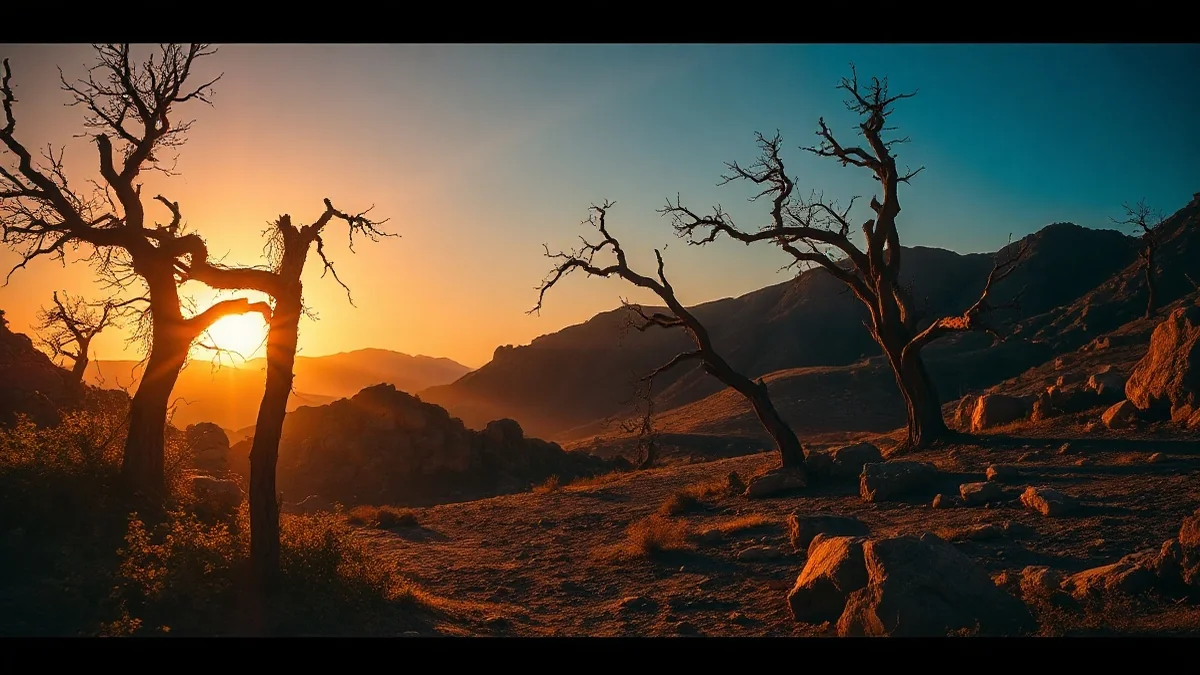
Visually, the film is a triumph of atmospheric discomfort. The desert isn’t just a backdrop; it’s a hostile environment that eats up resources and crushes hope. The cinematography utilizes the vast, arid landscapes to isolate the characters, making the RV feel less like a mobile home and more like a sinking lifeboat. When the family finally has to abandon the vehicle and trek on foot, the claustrophobia ramps up. You can practically feel the sand in your lungs and the heat radiating off the asphalt.
The character dynamics are where the film’s weaknesses occasionally surface, despite the strong performances. The parents, Ethel (Kathleen Quinlan) and Big Bob (Ted Levine), provide the emotional anchor. Big Bob is the archetypal tough guy protector, a former soldier who believes he can handle anything. While this archetype is well-worn, Ted Levine imbues him with a weary, weary cynicism that grounds the proceedings. He isn’t just screaming orders; he is a man trying to maintain order in chaos. His eventual fate serves as the catalyst for the family’s psychological unraveling.
The teenagers, Doug (Aaron Stanford) and Brenda (Emilie de Ravin), serve a slightly different function. They are the bridge between the old world (the parents) and the new world (the mutants). Doug is the reluctant hero, capable but hesitant, while Brenda is the pragmatic survivor who realizes quickly that her humanity is a liability. Their relationship is functional, which is appropriate for a film that prioritizes survival over romance.
The violence is graphic and frequent, adhering to the standards of the early 2000s splatter renaissance. However, Aja treats the gore with a clinical detachment that makes it feel like part of the environment rather than gratuitous for shock value alone. The mutant makeup, handled by Greg Nicotero (who is credited as “Cyst” in the cast list, though he is better known for his work on The Walking Dead), is grotesque but rooted in character. You understand why these people are mutated—they were exposed to radiation, yes, but they were also forced to evolve in isolation.
One of the film’s most interesting elements is the subplot involving Ruby (Laura Ortiz), a mutant who has been adopted by the Carters. She acts as the catalyst for the most emotional conflict, forcing the family to confront the morality of their own survival instincts. It’s a theme that adds a layer of psychological depth to the slasher elements, even if it is wrapped in explosions and severed limbs.
At a runtime of 107 minutes, the film maintains a brisk pace that avoids the sluggishness often found in desert-set thrillers. It doesn’t overstay its welcome, knowing exactly when to pull the plug on the tension and cut to the next setpiece. It respects the audience enough to treat the scenario as a logical puzzle, even if the solution is often “run fast and shoot straight.”
The production by Fox Searchlight Pictures (correcting the record: yes, this is indeed a Fox Searchlight release) managed to stretch a relatively modest budget of $15 million into a box office haul of nearly $70 million. It was the rare remake that didn’t just ape its predecessor but instead tried to out-do it in terms of grit and scope. While it may not have the cultural resonance of the original 1977 film, it stands as a solid, modern entry in the survival horror subgenre.
Ultimately, The Hills Have Eyes (2006) is a movie about the thin veneer of civilization. It suggests that when you strip away the suburbs and the laws of the state, you’re left with a primal instinct to survive at all costs. It’s not a subtle film, but as a visceral experience, it works. It’s loud, sweaty, and undeniably effective.
This article was generated by an AI system and reviewed by our editorial process.