The Host
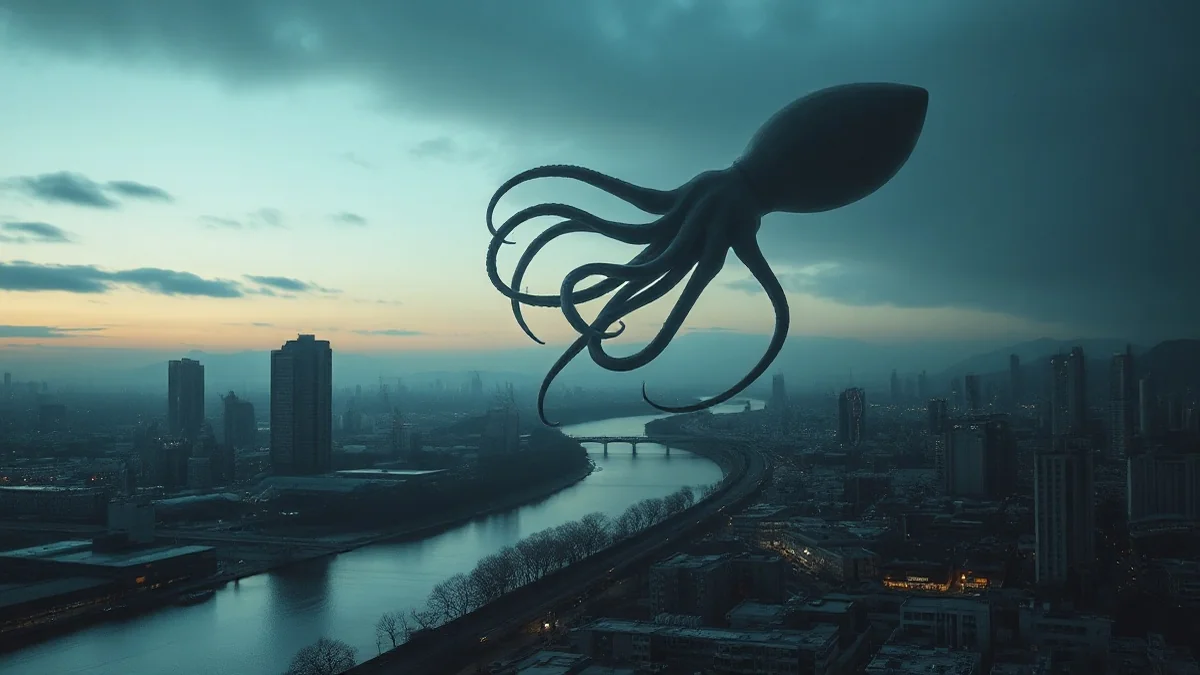
It takes guts—or at least an appetite that isn’t terrified of stomach acid—to release a creature feature in the mid-2000s, especially when your country is trying desperately to shake its reputation as merely “the land where The Ring copycats are made.” Bong Joon Ho’s 120-minute marathon (ad34bub3c)—known in Korea simply by the title of a bar that serves cheap soju and fried food—is not your typical high-concept fright flick. It is less Jaws remake, more Kafka meets municipal bureaucracy with tentacles.
The premise feels lifted straight from 1950s B-movie pamphlets: toxic waste dumped into Seoul’s Han River leads to the emergence of a massive mutated “squid-like creature.” It drags people out by their ankles, including our protagonist’s teenage daughter. The father is Gang-du (Song Kang-ho), an unemployed slacker who manages a snack stand on the riverbank and spends his evenings watching baseball games in bars while avoiding responsibility at home.
But let’s be honest: if this were Jurassic Park, we would spend ninety minutes looking for clues about which dinosaur to kill with flammable fire extinguishers. Bong is less interested in suspense than he is in social commentary wrapped in rubber skin, and the result—despite a runtime that drags just enough near the finale—is remarkably potent.
The film’s monster design has aged surprisingly well because it isn’t trying to be “cool.” It looks like something dredged from an industrial lagoon. The creature doesn’t roar or have laser eyes; instead, when people die (and yes, they do), the aftermath involves a lot of mucus and screaming on camera phone video clips that feel terrifyingly real in their ubiquity.
What elevates The Host above standard creature features—like those glossy J-horror knock-offs from New Line Cinema—is how thoroughly it commits to its family unit. The “Park” clan isn’t just victims; they are a dysfunctional mess of losers and martyrs who somehow end up being the only people capable of rescuing their loved one.
We have Song Kang-Ho as Gang-du, an actor whose career is defined by playing men with hearts made out of soft cheese—he’s lovable but incompetent. Then we have his father (played respectfully if slightly too long-windedly Byun Hee-bong), a retired military man who spends half the movie in denial and alcohol-induced stupors, convinced that “if you ignore it with your eyes closed… no evil can touch us.” It’s an absurd line delivered to his grandchildren on Christmas Eve while he should be making sure they aren’t eaten by monsters. The logic holds up about as well as a wet paper towel.
But the family drama is merely fuel for Bong’s satire of South Korean bureaucracy and, more pointedly, American military influence in Korea during that era—a period marked by real-world friction between locals and US troops stationed nearby (specifically referencing an incident where U.S. soldiers dumped soup down a drain pipe). The film doesn’t just mention this; it weaponizes the memory.
The scene involving CDC quarantine officers or “American doctors” is particularly biting, offering no heroes on either side of the fence during that initial panic phase . Everyone wants to look good for their bosses. The military and police are more concerned with managing PR than saving lives.
Visually, Bong Joon Ho balances practical effects—which give the monster a tactile weight—with CGI spots where it feels like he’s regretting his budget choices (the creature looks slightly less convincing when jumping from one building to another). However, you can forgive some dodgy wire work in The Host because of how emotional these moments are. The film demands that we care about Gang-du’s quest.
Is the monster actually a “Host”? Bong has stated he hated using CGI slime and wanted to use animatronics for everything, but practical effects constraints forced his hand on certain shots where you can see it moving like oil. It’s clumsy in execution sometimes—a creature that looks more interested in flopping over than terrifying—but the intent is pure monster movie.
The pacing hits a weird rhythm: two hours of family bonding and municipal incompetence followed by an intense action sequence involving duck boats (of all things), culminating in what might be one of the most cathartic, yet emotionally bankrupting shots regarding animal rights you’ll ever see. The dog dies for reasons that are plot-convenient but viscerally gut-wrenching . It’s not subtle cruelty; it is sheer frustration.
Ultimately, The Host serves as the bridge between classic monster cinema and Bong Joon Ho’s later social paranoias. The family at its center—Song Kang-ho by default acting like he owns every scene —is a chaotic microcosm of Korean society itself, stubbornly surviving disaster while complaining about the government.
It is not perfect; it feels long and occasionally bogged down in bureaucratic exposition that slows the monster’s arrival. But when those tentacles finally wrap around something alive on screen—human or otherwise—you’re invested because Bong Joon Ho gave you a reason to be, turning a rubber fish into an allegory for modern alienation.
This article was generated by an AI system and reviewed by our editorial process.