Train to Busan
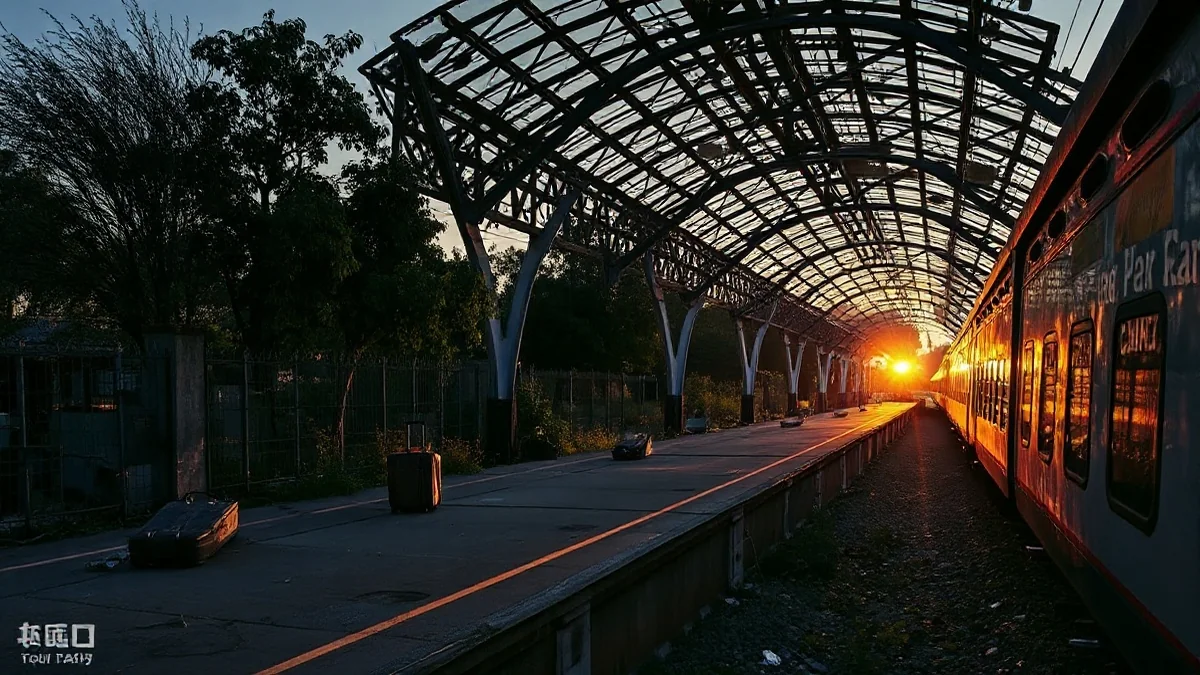
July 20, 2016. The release date of Train to Busan marks a specific point in cinema history where the zombie apocalypse genre officially entered its mid-life crisis. We had gone through the campy fun of Zombieland, the emotional soap opera of World War Z, and the gritty, gritty, gritty grimdark of The Walking Dead. By the time Yeon Sang-ho’s film hit South Korean screens, the subgenre was practically begging for a fresh coat of paint. What it got was a competent, often thrilling, albeit slightly cynical rehash that managed to distinguish itself through pure kinetic energy and a surprisingly sharp social commentary.
For a film with a production budget of only $8.5 million , Train to Busan looks like it cost ten times that. Director Yeon Sang-ho, who previously made the animated hit The Heaven & Earth, proved he could translate that narrative focus into live-action thrills. The premise is as familiar as a stale donut: a mysterious virus spreads, the authorities freak out, and a group of passengers on a KTX express train to Busan must survive. The tagline—“Life-or-death survival begins”—promises exactly that, and mostly delivers.
The film’s setting is the primary character here. The train is a claustrophobic microcosm of society. You can’t run away, because the doors lock; you can’t hide, because there are no basements. This creates a constant state of anxiety that the film utilizes effectively. The pacing is brisk, clocking in at a tight 118 minutes, so the audience doesn’t have time to overthink the logic holes that usually plague zombie movies.
Enter Gong Yoo as Seok-woo, a corporate finance manager with the personality of a wet cardboard. He is divorced, estranged from his daughter, Soo-ahn (played with terrifying precociousness by Kim Su-an), and generally just a jerk. Seok-woo represents the modern, selfish individual who is only motivated by his own comfort or convenience. Watching him is often uncomfortable because he is so thoroughly unlikable. It takes about an hour before he actually starts acting like a parent rather than a reluctant passenger. This slow burn of character development is where Yeon Sang-ho shines; he doesn’t give you a hero. He gives you a guy who has to be dragged kicking and screaming into heroism.
Of course, any competent horror movie needs a hero, and Train to Busan gives us Don Lee (Ma Dong-seok) as Sang-hwa. If you know Asian cinema, you know Don Lee brings the muscle. He plays a salaryman who is just trying to get home to his wife. When the virus hits, Sang-hwa is the moral compass of the train, the one who steps up when the others are paralyzed by panic. The action sequences involving him are visceral and well-choreographed. There is a specific scene where he is fighting off a horde of the infected that feels like a masterclass in practical effects and stunt work. It’s a shame that his character is often overshadowed by the narrative focus on Seok-woo, because Sang-hwa is the one who actually deserves to be on a poster.
Then there is the supporting cast, which functions as a survey of human nature. There’s the high school baseball team (Choi Woo-shik and An So-hee) who are annoying brats until they realize they are cannon fodder. There’s the homeless man, played with a weary, sympathetic grit by Choi Gwi-hwa. There are the elderly passengers and the young couple. The film doesn’t just want you to be scared of the zombies; it wants you to be scared of people. The zombies themselves are not portrayed as monsters, but as victims of a plague who are driven by a desperate, animalistic hunger. It’s a classic subversion that separates the film from the mindless slaughterhouses of Hollywood.
The social allegory is the film’s real ace in the hole. The film cleverly uses the train car seating arrangements to highlight class warfare. The business class passengers are insulated, wealthy, and seemingly untouchable—until the situation forces them to confront their privilege. Meanwhile, the economy class passengers, who have to scrounge for resources, are the first to face the brutality of the situation. It paints a picture of a society where the rich hole up in the back while the poor get eaten first. It’s a sharp observation that elevates the film from a slasher flick to a commentary on societal decay.
Visually, the film is impressive. The cinematography captures the sterile, high-tech interiors of the train against the decaying, frantic exterior. The zombie design is practical and gory, avoiding the CGI “wobbly” look that plagues so many modern blockbusters. The sound design is also top-notch, using the train’s announcements and the screech of metal to create a constant sense of unease.
However, the film is not without its flaws. The dialogue is occasionally stilted, and the motivations of some characters feel a bit contrived to move the plot along. At times, the film sacrifices internal logic for external tension. For example, the way the virus spreads is handled with a sort of narrative convenience that sci-fi fans might groan at. But who are we to complain about plot holes when the film is this much fun? It grabs you by the lapels and doesn’t let go until the very last shot.
The climax on the platform at Busan Station is a masterclass in set piece design. It’s loud, chaotic, and surprisingly emotional. It leaves the fate of the characters ambiguous, which is a bold choice that works in the film’s favor. It doesn’t offer a neat Hollywood ending; it offers a grim reality.
In the grand scheme of horror history, Train to Busan might not be the genre-defining masterpiece some claim it is. It borrows heavily from films like 28 Days Later and Dawn of the Dead. But it executes those borrowings with a level of professionalism and energy that is rare in the modern era. It’s a film that understands the mechanics of a survival thriller and plays them better than almost anything else released around that time.
The legacy of the film is undeniable. It revitalized the zombie craze for a generation and proved that a foreign-language film could dominate the global box office on its own terms, without needing a Hollywood remake. It spawned a sequel (Peninsula) that tried to expand the universe but ultimately lacked the tight focus and heart of the original. But the first film remains a solid piece of entertainment.
Ultimately, Train to Busan is a film about connection. It starts with a father and daughter who can barely stand to be in the same room and ends with a family forged in fire. It’s a redemption arc wrapped in gore and suspense. For 118 minutes, it’s a hell of a ride.
This article was generated by an AI system and reviewed by our editorial process.